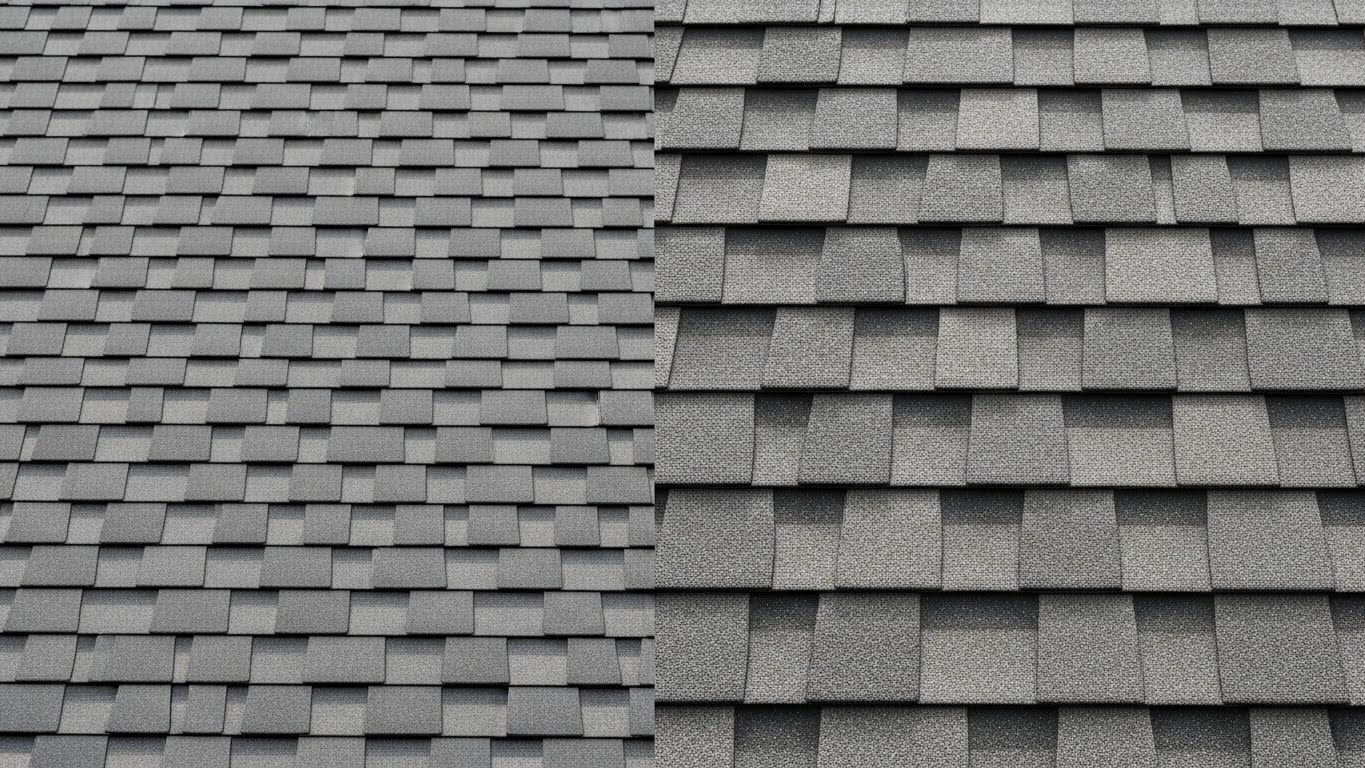
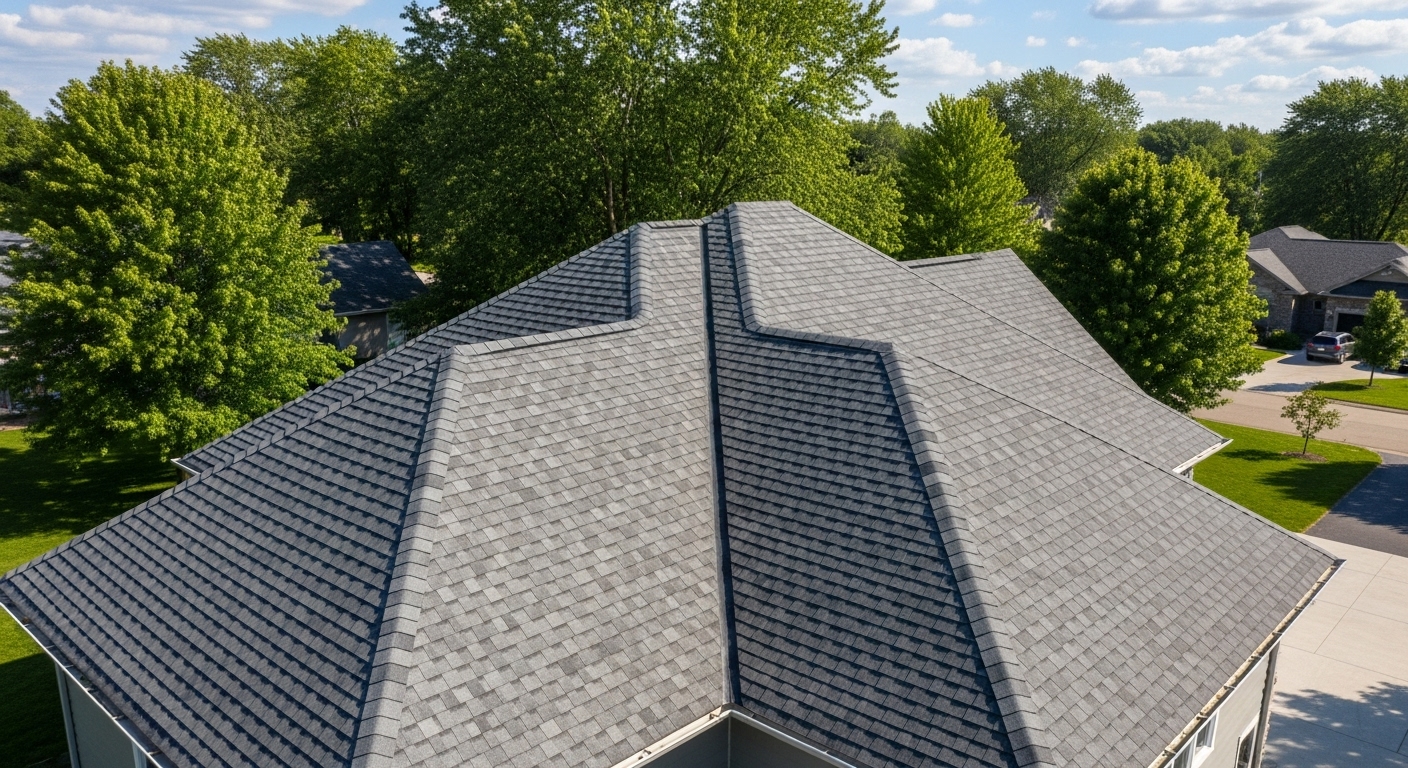
Wind damage on architectural shingles rarely announces itself loudly. No dramatic holes, no obvious missing sections every time. Most of it sits there quietly, almost smug, waiting for the next rainstorm to remind you it exists. People expect shredded roofs after high winds. That does happen, but more often the damage is subtle, awkward, and half hidden from street view.
Architectural shingles are thicker than old three tab styles, layered, heavier. They are built to resist wind better. That strength is also why damage can be harder to read at first glance.
Lifted shingles that never quite sit back down
One of the earliest signs is lifting. Wind gets under the shingle edge, bends it upward, then drops it back. The problem is, it does not always lie flat again. You end up with corners or edges slightly raised, catching light differently. From the ground it can look like shadow. On the roof it feels loose, almost springy.
These lifted sections break the seal strip underneath. Once that seal is gone, the shingle becomes more vulnerable the next time wind rolls through. Even moderate gusts can keep worrying it loose.
Creasing that looks like a faint scar line
Creasing is classic wind damage on architectural shingles. When strong gusts bend the shingle upward, the asphalt mat can fold slightly. When it drops back down, a crease remains. It often runs horizontally, about an inch or two above the bottom edge.
This crease might not leak today. But it weakens the shingle structure. Over time, water can work into that fold, granules loosen, and the shingle starts aging faster than its neighbors. Creases usually show up in clusters, following wind direction.
Missing shingles are obvious, but not always dramatic
Yes, sometimes shingles blow clean off. But with architectural shingles, it is often just one here, one there. Not entire sections. A single missing shingle exposes underlayment and nails. That spot becomes a fast track for moisture intrusion.
After storms, homeowners sometimes assume the roof survived because they do not see piles of debris. One missing architectural shingle can still mean trouble, even if everything else looks fine.
Granule loss that feels patchy and uneven
Wind damage can strip granules, especially along edges and ridges. Granules protect the asphalt from UV breakdown. When they disappear, the shingle surface looks darker or smoother in spots.
You might notice granules collecting in gutters or at downspout exits after storms. Some granule loss is normal aging. Wind damage tends to create irregular patches, not uniform wear across the roof.
Ridge cap damage stands out differently
Ridge caps take a beating during wind events. They sit highest, catch the most uplift pressure. On architectural roofs, ridge caps may crack, lift, or partially detach. Sometimes nails back out slightly, creating tiny gaps.
Ridge damage often gets ignored because leaks do not show immediately. But once ridge caps fail, wind driven rain can enter at the peak, which is about as bad as it sounds.
Directional damage tells a story
Wind rarely damages a roof evenly. One side usually looks worse. The windward slope shows lifted edges, creases, and missing pieces. The opposite side may look untouched. This uneven pattern is a strong clue that wind, not age, caused the damage.
Roof inspectors often map damage direction to storm data. It helps separate storm damage from general wear, which matters during insurance claims.
Why architectural shingles hide damage better
Their layered design masks issues. Shadows from thicker profiles hide lifted corners. Creases blend into texture. From the driveway, the roof looks fine. Up close, problems reveal themselves slowly.
This is why post storm inspections matter even when everything looks calm from below. Architectural shingles resist wind well, but when they fail, they fail quietly.
Can wind damaged shingles still seal themselves again?
Sometimes yes, sometimes no. Heat can help reseal minor lifts if the adhesive strip remains intact. But once a crease forms or the seal breaks fully, resealing is unlikely. The shingle might lie flat, but its resistance is gone.
This false sense of security causes delays. Months later, a leak appears, and nobody connects it back to that windy afternoon.
Data points that give context, not comfort
Industry testing shows many architectural shingles are rated for winds between 110 and 130 mph when installed correctly. That rating assumes proper nailing, sealed strips, and uniform installation. Real world conditions rarely stay ideal forever.
Insurance claim data consistently shows wind as one of the top causes of residential roof damage nationwide. Not always catastrophic. Often slow, cumulative, and underestimated.
Final thoughts
Wind damage on architectural shingles is more about reading signals than spotting disasters. Lifted edges, faint creases, uneven granule loss, a missing shingle or two. These are quiet warnings, not loud alarms.
Ignoring them does not make them heal. It just gives weather more time to work. The roof may look fine from the street, but roofs do not fail for an audience. They fail when nobody is looking.