
The question sounds simple. It never is. Roofing prices behave a bit like fuel costs or eggs at the grocery store. Same product, different week, different bill. For a 2000 sq ft house, asphalt roofing usually lands people somewhere between what they expected and what they hoped it wouldn’t be. The numbers move around, sometimes quietly, sometimes violently.
Most homeowners asking this are really asking two things at once. What is the typical price. And what will my price turn into once the tear off dust settles.
First, a quick clarity check on square footage
A 2000 sq ft house does not mean 2000 sq ft of roof. Roof area is larger because of slope, overhangs, and layout. A single story ranch with a low pitch might end up around 2200 to 2400 sq ft of roof surface. A steeper roof or multi level design can push that closer to 2600 sq ft or more. Roofers measure in squares, where one square equals 100 sq ft. So most 2000 sq ft homes fall between 22 and 26 roofing squares.
That math alone explains why estimates vary so much. Two houses same interior size, different roof bills.
Average national cost range for asphalt shingles
Based on recent industry cost surveys, contractor pricing reports, and material distributor averages, installing an asphalt shingle roof on a 2000 sq ft home typically costs between $7000 and $12000. That range already includes labor, materials, underlayment, and standard accessories. Lower end pricing usually reflects basic three tab shingles and simple roof geometry. Higher numbers usually involve architectural shingles, steeper slopes, or extra labor complications.
On a per square basis, asphalt roofing often falls between $350 and $550 per square installed. Multiply that by roughly 24 squares and the math starts to feel uncomfortably real.
| Roof Size (Square Feet) | Cost of Asphalt Shingles | Total Cost with Installation |
|---|---|---|
| 1,000 | $1,311–$1,871 | $4,214–$5,836 |
| 1,200 | $1,574–$2,245 | $5,025–$6,959 |
| 1,500 | $1,967–$2,807 | $6,240–$8,643 |
| 2,000 | $2,623–$3,742 | $8,266–$11,449 |
| 2,500 | $3,279–$4,678 | $10,293–$14,256 |
| 3,000 | $3,934–$5,613 | $12,319–$17,063 |
| 3,500 | $4,590–$6,549 | $14,345–$19,870 |
Ref: https://www.thisoldhouse.com/roofing/shingle-roof-cost
Material cost breakdown, where the money starts
Asphalt shingles themselves usually account for 35 to 45 percent of the total bill. Three tab shingles remain cheaper, often costing contractors $90 to $110 per square for materials. Architectural shingles cost more, typically $120 to $160 per square wholesale depending on brand and region.
Underlayment, starter strips, ridge caps, flashing, and nails add another layer of expense. These items are rarely itemized clearly on estimates, but they matter. Synthetic underlayment costs more than felt, but lasts longer and handles moisture better. Most modern installs now use it by default.
Labor costs, the part nobody loves to pay for
Labor makes up a surprisingly large portion of the bill, sometimes over 50 percent. Roofing is physical, risky, and fast paced. Crews are paid not just for time, but for exposure to falls, heat stress, and unpredictable weather.
On a straightforward single story roof, labor might run $150 to $250 per square. Add a steep pitch, multiple valleys, dormers, or limited access, and labor can climb fast. Two stories almost always costs more than one, even if the roof area stays similar.
Tear off and disposal fees sneak in quietly
Removing the old roof is not free, even if it looks like chaos and trash from the ground. Disposal fees vary by region. Landfill charges, dump trailers, and labor for tear off often add $1000 to $2500 to the project. If the existing roof has two layers of shingles, which is common in older homes, expect that number to rise.
Some estimates bundle this in quietly. Others break it out clearly. Either way, it gets paid.
Regional pricing differences matter more than people expect
Roofing costs are deeply regional. Labor rates in the Midwest are often lower than in coastal cities. Material pricing shifts with transportation costs and demand spikes after storms. In areas prone to hurricanes or hail, asphalt roofing prices often climb after major weather events due to supply strain.
A 2000 sq ft house in one state may cost $3000 more to roof than the same house somewhere else. Same shingles. Same job. Different zip code reality.
Roof pitch and complexity quietly drive cost
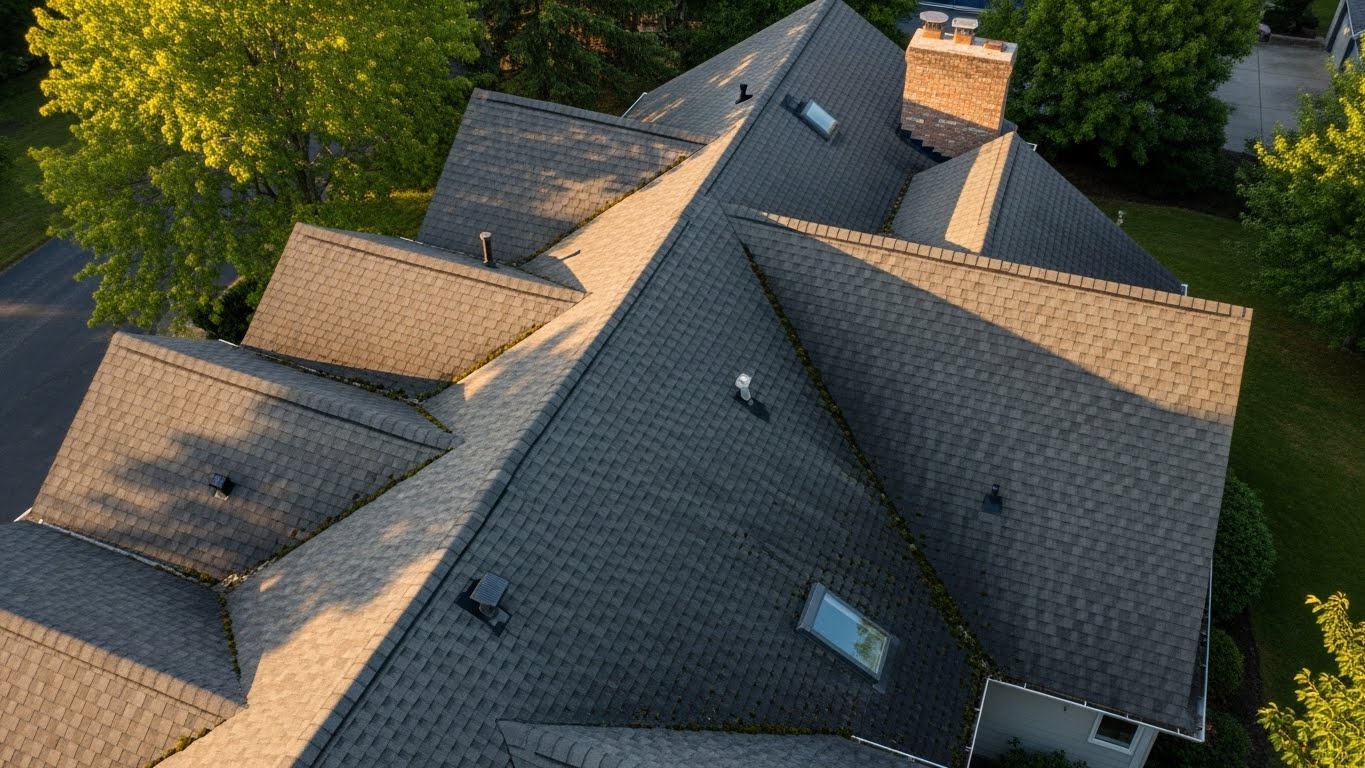
A low slope roof is easier to walk, stage, and shingle. Steep roofs slow crews down and increase safety precautions. Anything above a 6 12 pitch often adds labor surcharges. Valleys, skylights, chimneys, and intersecting rooflines all add cutting time and flashing work.
Simple rectangles are cheaper. Complicated geometry costs patience and money.
Repairs under the shingles, the wildcard expense
Once the old shingles come off, surprises sometimes appear. Rotten decking, soft spots, or past leak damage can add unexpected costs. Plywood replacement typically costs $70 to $120 per sheet installed. Most roofs need at least a few sheets replaced, even well maintained ones.
Good contractors warn homeowners about this upfront. It still stings when it shows up on the final invoice.
Warranty choices influence final pricing
Asphalt shingles come with manufacturer warranties ranging from 20 years to limited lifetime coverage. Extended warranties often require specific installation practices and certified installers. That certification and extra labor usually raises the cost, but improves long term protection.
Some homeowners skip this. Others value the peace of mind. Both choices affect the total number at the bottom.
So what should a homeowner realistically budget?
For most standard 2000 sq ft homes, a realistic planning number sits around $9000 to $10000 for a quality asphalt roof installed correctly. That assumes architectural shingles, one layer tear off, average pitch, and no major structural repairs hiding underneath.
Cheaper is possible. More expensive is common. The middle is where most jobs land.
Final thoughts
Roofing prices frustrate people because they look predictable on paper and behave unpredictably in real life. A 2000 sq ft house gives a useful starting point, but never a final answer. The roof shape, the crew, the season, and the materials all pull the number in different directions.
The smartest homeowners focus less on chasing the lowest quote and more on understanding what is included, what is assumed, and what might change once the old roof comes off. That awareness usually saves more money than any discount ever could.
