
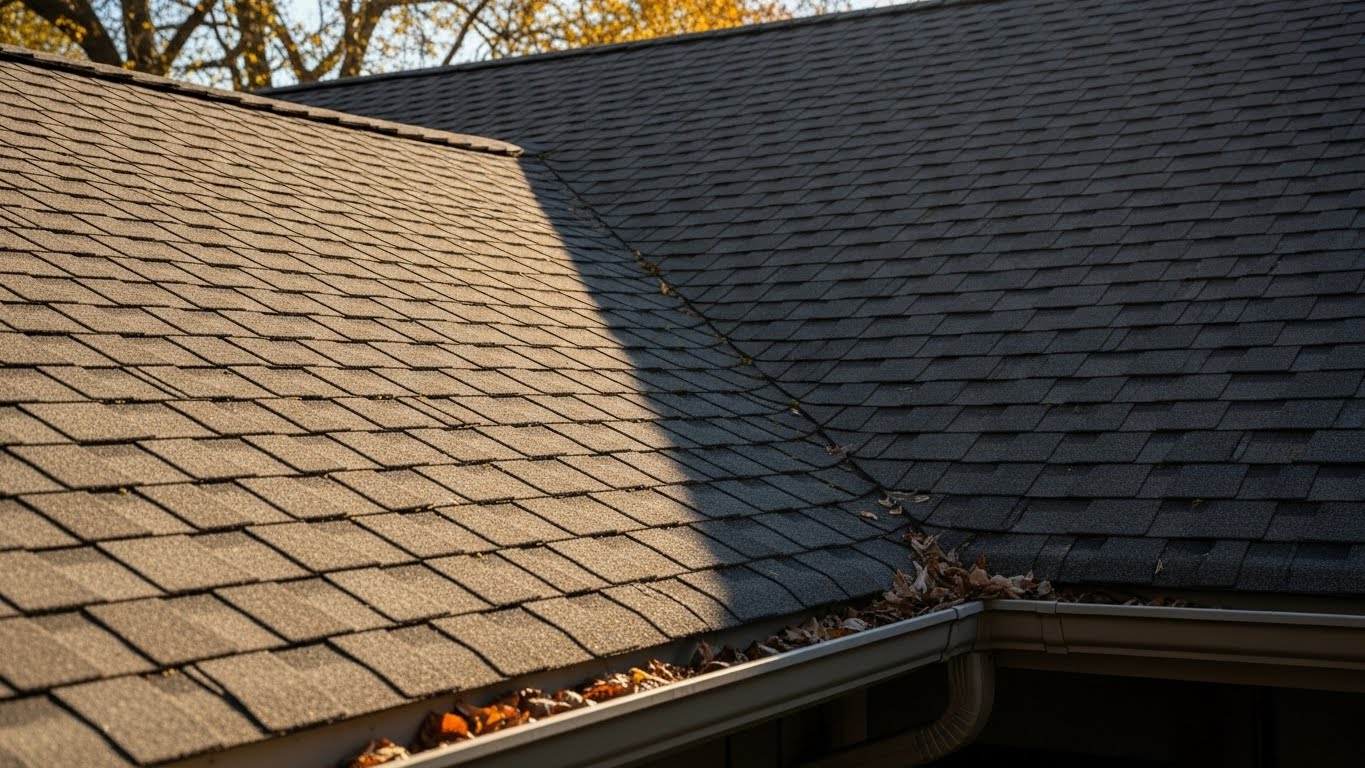
Asphalt shingle roofs are everywhere, quietly doing their job while nobody really thinks about them. Until one day you spot a curl, or a shingle in the yard, or a leak that should not exist yet. Then the big question pops up, usually with some frustration attached. How long is this roof actually supposed to last anyway.
The short answer sounds simple. The real answer, not so clean.
Average Lifespan of an Asphalt Shingle Roof
Most asphalt shingle roofs last somewhere between 15 and 30 years. That range alone should tell you something. There is no single number that fits all houses, climates, or installers.
According to data published by housing and insurance studies in the US, the median replacement age for asphalt shingle roofs sits around 20 to 22 years. Many roofs do not make it to the top end of their advertised lifespan, even if the shingles were labeled 30 year or 40 year products.
That label is not a promise, more like a category.
Types of Asphalt Shingles and How Long They Hold Up
Not all asphalt shingles are built the same, even though they can look similar from the street.
3 Tab shingles
These are the flat, uniform ones. Light weight, lower cost, less material. Their real world lifespan often falls between 12 and 18 years, sometimes less in harsh weather zones. Wind resistance is also lower, which matters more than people think.
Architectural or dimensional shingles
Thicker, layered, heavier. These are the most common choice today. Many homeowners see 18 to 25 years out of them, assuming decent installation and average conditions.
Premium or luxury asphalt shingles
These try to mimic slate or shake. They use more asphalt and reinforcement. In controlled conditions they can last 25 to 30 years, though weight and roof structure start to matter more here.
The jump in lifespan is real, but it is not automatic.
Climate Plays a Bigger Role Than Marketing Labels
Weather quietly decides a lot of roof outcomes.
In hot regions, prolonged heat causes asphalt to dry out faster. Studies on roofing material degradation show that UV exposure and high surface temperatures accelerate granule loss and asphalt brittleness. Shingles in southern climates often age faster, even without storms.
Cold regions bring a different problem. Freeze thaw cycles expand tiny cracks over time. Ice dams can also force water backward under shingles, stressing areas never meant to hold moisture.
High wind zones shorten lifespan across all shingle types. Even shingles rated for higher wind speeds slowly loosen with repeated uplift, not just during big storms.
Installation Quality Can Add or Subtract Years
This part gets underestimated, constantly.
Industry inspections have shown that a significant percentage of early shingle failures trace back to installation issues, not product defects. Common problems include improper nailing depth, poor ventilation planning, reused flashing, and rushed layout.
A perfectly good shingle installed poorly may fail in half the time. A decent shingle installed carefully can quietly exceed expectations.
Roof ventilation matters too. Poor attic airflow traps heat and moisture, cooking the roof deck from below. That heat shortens shingle life, even if the shingles themselves look fine at first glance.
Maintenance Does Matter, Even If It Feels Minor
Asphalt roofs are marketed as low maintenance, not no maintenance.
Simple actions like keeping gutters clear, removing heavy debris, and fixing small flashing issues early can slow down wear. Granule loss accelerates when water does not drain properly. Moss and algae hold moisture against the surface longer than intended.
Research into roofing longevity consistently shows that neglected drainage and moisture issues reduce effective roof life by several years. That loss is quiet, and usually noticed too late.
Manufacturer Warranties vs Real Lifespan
A 30 year shingle warranty does not mean a 30 year roof, and most homeowners find that out the hard way.
Warranties often cover material defects, not labor, not installation errors, and not normal aging. Many are prorated after the first decade, meaning the coverage value drops every year.
Insurance claim data shows that roofs are often replaced due to leaks, storm damage, or cumulative wear long before warranty periods expire. The warranty is a safety net, not a lifespan clock.
Signs Your Asphalt Roof Is Near the End
Some clues are subtle, others not.
Curling or cupping shingles usually signal advanced aging. Bald spots where granules are gone expose asphalt directly to sunlight, speeding failure. Repeated minor leaks in different locations often mean the system is tired overall.
If your roof is over 20 years old and showing multiple symptoms, studies suggest replacement is usually more cost effective than constant patching. Repairs at that stage tend to stack up fast.
So, How Long Does an Asphalt Shingle Roof Really Last
For most homes, under normal conditions, around two decades is a realistic expectation. Some roofs exceed that, some fall short. Climate, installation, ventilation, and basic upkeep quietly decide the outcome more than brand names ever will.
Asphalt shingles are reliable, not magical. They age whether we watch them or not. Knowing their real lifespan helps avoid surprise repairs and rushed decisions later, which is usually when costs climb the fastest.
