
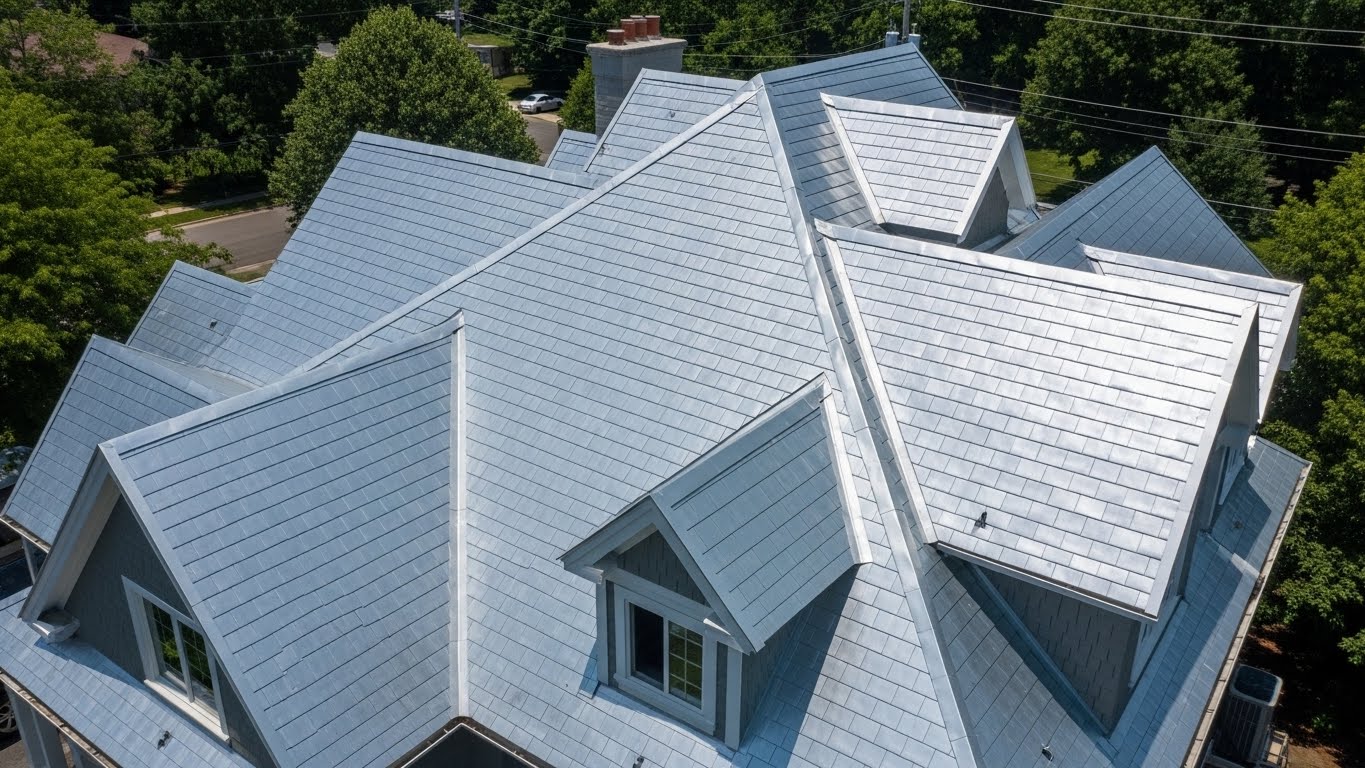
It sounds like a yes or no question. It never stays that clean. Aluminum shingles look tough, sometimes almost indestructible when you see them laid out on a roof. Metal has that psychological effect. People assume strength equals walkability. That assumption gets tested very fast once weight shifts, shoes scrape, and balance wobbles a little.
Yes, you can walk on aluminum shingles. But that sentence needs a long pause after it. Because walking and walking safely without damage are not always the same thing.
What aluminum shingles are actually designed to do
Aluminum shingles are built to shed water, snow, and heat. They are engineered to resist corrosion, handle expansion from temperature swings, and survive decades of exposure. They are not primarily designed as walking surfaces. That distinction matters.
Most aluminum shingles are thinner than people expect. Typical thickness often falls between 0.019 and 0.032 inches. That is strong for roofing, but flexible under concentrated pressure. Your foot concentrates weight in a small area, especially near edges or ribs.
How weight transfers across aluminum shingles
When you step on aluminum shingles, your weight does not spread evenly unless the shingle is fully supported beneath. Solid decking helps. Gaps or uneven sheathing do not. Stepping between fastening points increases the risk of bending or oil canning.
Oil canning is that subtle wavy distortion metal gets after pressure. It does not always ruin performance, but it can ruin appearance. And once it happens, it usually stays.
Foot traffic vs brief access
Occasional walking for inspection or minor work is usually acceptable if done carefully. Regular foot traffic is another story. Aluminum shingles do not like repeated compression in the same spots. Over time, seams can loosen slightly, coatings can scuff, and fasteners may experience stress.
Roofers often treat aluminum shingle roofs as access only surfaces. You go up, do the task, and get off. Hanging out up there, pacing back and forth, or dragging tools across the surface increases risk fast.
Shoes matter more than people think
Footwear changes everything. Hard soles concentrate pressure. Soft rubber soles distribute it better. Shoes with sharp edges or embedded debris can scratch protective coatings. Once coatings scratch, oxidation resistance drops in that spot, slowly but surely.
Professionals often wear clean soft soled shoes and walk near overlaps or fastening points where support is strongest. Random stepping in open shingle spans is where dents usually appear.
Temperature plays a role, quietly
Aluminum behaves differently in heat versus cold. In high temperatures, aluminum becomes slightly more pliable. That can increase dent risk. In cold conditions, it stiffens but coatings may become more brittle, raising scratch risk instead.
Walking on aluminum shingles during extreme heat or cold is generally discouraged for these reasons. Mild weather is safer, relatively speaking.
Roof slope changes the equation
Low slope aluminum shingle roofs are easier to walk on. Steeper slopes increase slip risk and force weight to shift toward edges. Edges are weaker points structurally. That combination leads to bent tabs or loosened interlocks.
Once an interlock deforms, water shedding performance can drop. It does not always leak immediately. Problems often show up later, quietly, during heavy rain.
Manufacturer guidelines usually hedge their answers
Most manufacturers avoid giving a simple yes. Their language tends to sound cautious, almost evasive. They often say foot traffic should be minimized and only done when necessary. That wording is intentional. It protects the product and limits warranty disputes.
Some warranties exclude cosmetic damage caused by foot traffic. Others exclude any damage caused by improper access. Reading that fine print matters more than people admit.
How professionals actually walk on aluminum shingles
Roofing contractors who work on aluminum shingles use specific habits. They step near fasteners, distribute weight slowly, and avoid sudden pivots. They use foam pads or roof boards when longer access is required. They keep tools off the surface when possible.
This is not casual walking. It is controlled movement with purpose. That difference is where most homeowners get tripped up, sometimes literally.
What happens if aluminum shingles get dented
A dent does not always mean failure. Aluminum does not crack easily. But dents can disrupt water flow, trap debris, and alter appearance. On visible roof slopes, cosmetic damage can be just as painful as functional damage, especially given the cost of metal roofing.
Replacing individual aluminum shingles is possible, but not always simple. Interlocking systems often require partial disassembly around the damaged area.
Final perspective
You can walk on aluminum shingles, yes. But you should do it sparingly, carefully, and with awareness of how the system works. Aluminum roofs reward caution and punish casual assumptions.
If access is frequent or heavy work is planned, temporary walk boards or professional help make more sense. The roof will still be there long after the job is done, quietly reminding you whether those footsteps were gentle enough.
