
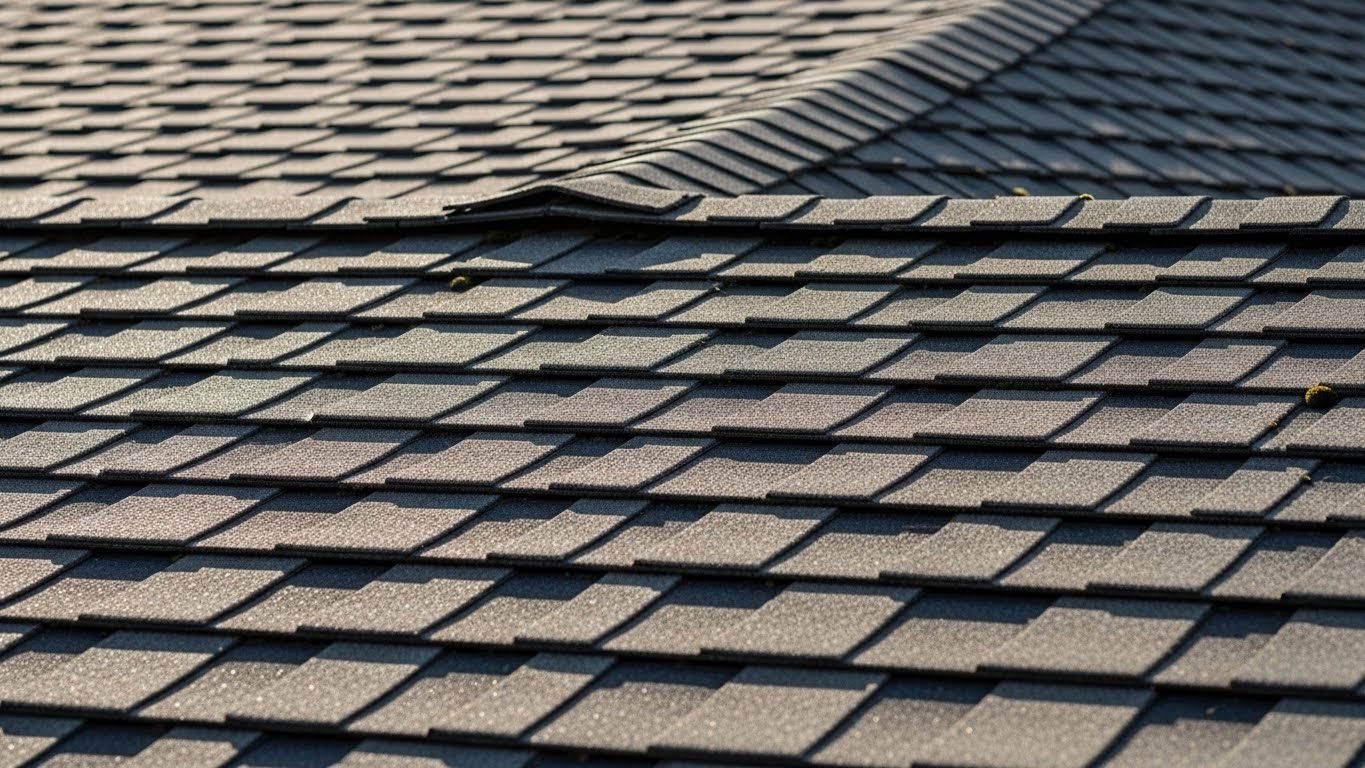
Architectural shingles get talked about like a forever roof sometimes, but roofs don’t live in a bubble. They age, they react, they wear down in odd ways. This article breaks down how long architectural shingles actually last, why some roofs fail early, and why others quietly hold on far longer than expected, even when neighbors are re-roofing already.
What architectural shingles actually are
Architectural shingles, also called dimensional shingles, are a laminated asphalt product. They are thicker than old three-tab shingles, built in layers, and designed to cast shadow lines so the roof looks deeper and less flat. That thickness matters. More asphalt, more granules, more resistance to weather stress, at least in theory.
Most architectural shingles sold today are fiberglass based. That core replaced organic mats decades ago, mainly because fiberglass resists moisture absorption better. That single material change alone pushed average shingle life forward by several years, not overnight, but steadily.
Average lifespan you can realistically expect
For most homes, architectural shingles last between 22 and 30 years. That is not marketing talk, it is what long term field data and tear-off inspections tend to show. Some roofs go past 30, some struggle to reach 20, and both scenarios usually have clear reasons behind them.
Manufacturers often advertise 30 year, 40 year, or even 50 year warranties. Those numbers confuse people. A warranty length is not the same as real world lifespan. It is closer to a materials promise, with coverage rules that thin out as the roof ages. Labor is often excluded after the early years, and proration kicks in quietly.
Industry surveys of roofing contractors consistently show architectural shingles outlasting three-tab shingles by roughly 30 to 50 percent, depending on region. That is a meaningful jump, but not magic.
Climate plays a bigger role than brand names
Heat shortens asphalt life. Cold slows chemical aging but adds brittleness. Rapid temperature swings cause expansion and contraction stress. All of this stacks up.
In hotter southern regions, architectural shingles often show noticeable granule loss around year 15 to 18. In cooler northern areas, shingles may keep their granules longer but suffer cracking from freeze thaw cycles. Neither environment is gentle, just damaging in different ways.
Hail zones matter too. According to insurance claim data over the last decade, hail accounts for a large share of premature roof replacements in the central United States. Even impact rated architectural shingles can lose years off their service life after repeated storms, even if no leaks appear right away.
Installation quality quietly decides half the lifespan
This part gets underestimated constantly. Architectural shingles installed poorly can fail ten years early, sometimes faster. Nail placement, underlayment choice, deck preparation, and ventilation all matter.
Overdriven nails cut through fiberglass mats. Underdriven nails hold shingles up where wind can lift them. Improper spacing creates uneven stress points. None of this shows from the curb, but it shows later.
Ventilation is another slow killer. Attic heat trapped below the roof cooks shingles from underneath. Studies by building science groups show poorly ventilated roofs running attic temperatures 20 to 30 degrees hotter than properly vented systems. That heat accelerates asphalt oxidation, shortening life without warning signs.
Roof slope and orientation change aging patterns
Steep roofs shed water faster. Low slope sections hold moisture longer. South facing slopes bake in sun for years, while north slopes stay cooler and damp. On the same house, architectural shingles can age unevenly by five years or more between slopes.
This is why inspectors often find one side of a roof failing while the rest still looks serviceable. The roof did not age evenly, it aged by exposure.
Maintenance affects lifespan more than people think
Architectural shingles are marketed as low maintenance, not no maintenance. Moss holds moisture. Algae feeds on limestone filler in asphalt. Leaves trap water at shingle edges. Small issues compound quietly.
Roof cleaning studies show algae growth alone can increase surface moisture retention enough to raise shingle temperatures during sun exposure. That combo speeds up granule loss over time, not immediately obvious, but cumulative.
Simple maintenance, like clearing debris and addressing flashing early, can extend roof life several years. Ignoring small issues often costs the same years back.
When architectural shingles fail early
Early failure usually traces back to one of these patterns:
- Improper attic ventilation from day one
- Storm damage that went unnoticed
- Poor nailing technique
- Low quality underlayment
- Deck movement from older framing
Material defects do happen, but they are less common than installation or environment related problems. When defects occur, they often show up as blistering, unusual granule shedding, or widespread cracking before year ten.
Comparing architectural shingles to other roofing types
Architectural shingles sit in the middle of the roofing lifespan range. They last longer than three-tab asphalt. They fall short of metal, slate, or tile. That is the tradeoff.
Metal roofs often last 40 to 70 years. Clay tile can exceed 75 years. Slate can outlive the building itself. Those systems cost more upfront and require different structural support. Architectural shingles win because they balance cost, appearance, and service life reasonably well.
Signs your architectural shingles are nearing end of life
Curling edges, exposed fiberglass, heavy granule accumulation in gutters, and inconsistent color fading all point toward aging. Leaks usually come later, not first. By the time water enters the home, the roof has already been declining for years.
Professional inspections often catch these signs early. Homeowners usually notice them late, mostly because roofs are out of sight and easy to forget.
Final thoughts on lifespan expectations
Architectural shingles are durable, but not permanent. Expect two to three decades under average conditions, sometimes more, sometimes less. Installation quality, ventilation, climate, and maintenance decide the real outcome, not the label on the bundle.
A roof that lasts 30 years rarely does so by accident. It survives because the system around the shingles worked properly, quietly, year after year.
