
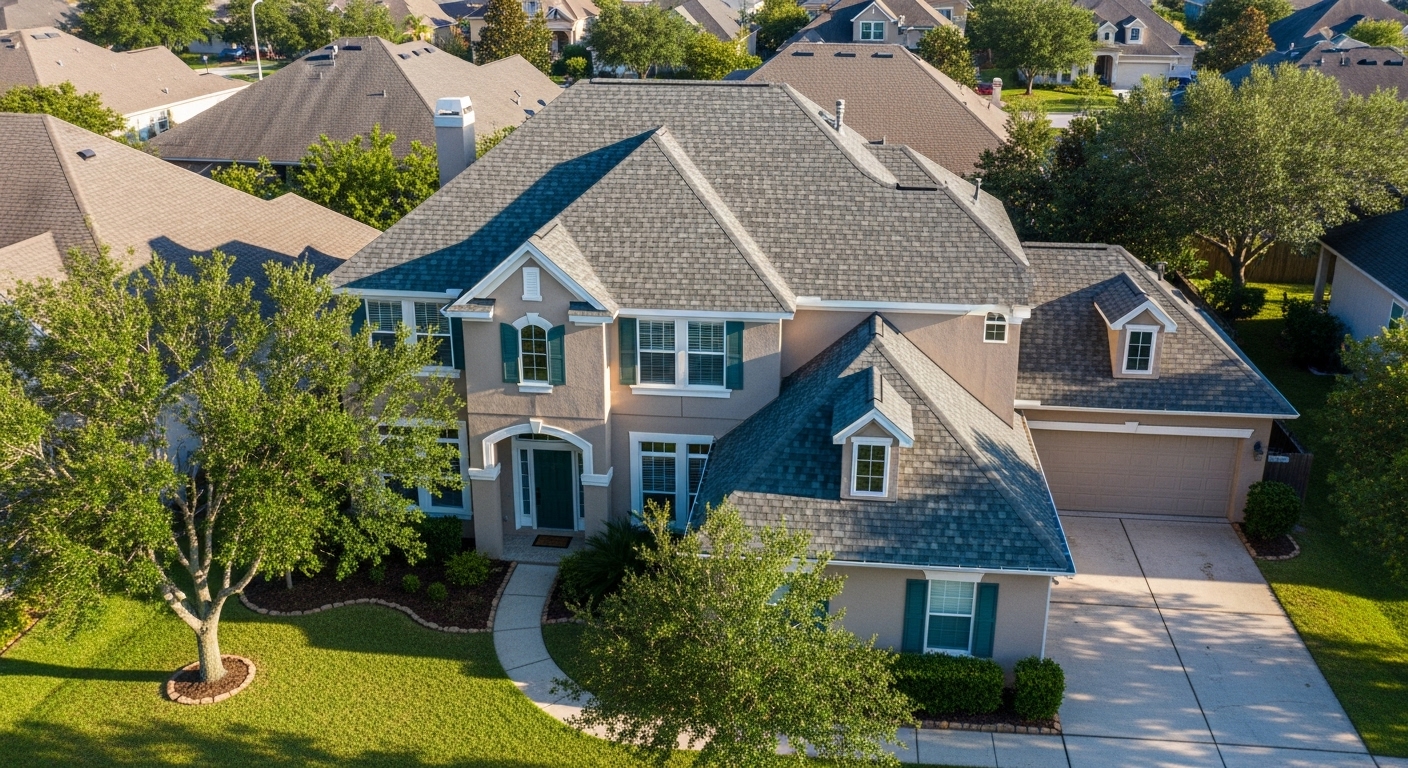
Wind damage sounds dramatic, like roofs flying off in movies. Real life is quieter. No explosions. No obvious collapse. Just shingles that behave differently after a rough night of wind. A homeowner wakes up, walks outside, everything looks mostly fine. Weeks later, a leak shows up. That is how wind damage usually works. Slow, sneaky, slightly insulting.
Wind damage to shingles is not about how strong the storm felt. It is about what the wind physically did to the roofing materials. And that difference matters, especially when insurance questions start floating around.
The basic definition inspectors actually use
Wind damage occurs when wind forces exceed the shingle’s ability to stay sealed, nailed, and flat. Asphalt shingles are designed to lift slightly and settle back down. That flexibility is normal. Damage begins when shingles do not return to position, or when the seal strip breaks permanently.
Most roofing standards consider damage present when shingles are lifted, creased, torn, displaced, or missing due to wind forces. Cosmetic scuffing alone usually does not qualify. Functional failure does.
Lifted shingles that refuse to lay flat
One of the most common forms of wind damage is lifted shingles. These are shingles that have been pulled upward by wind pressure and never fully resealed. Sometimes they look fine from the ground. Up close, you can slide a hand underneath the edge. That should not happen.
Once the adhesive seal breaks, water has an open path. Even light rain can start working its way underneath. Over time, nails loosen, and the shingle becomes easier to lift again during the next windy day. It becomes a cycle, not a single event.
Creased or bent shingles are a red flag
When wind lifts a shingle hard enough, it can bend it back on itself. This creates a visible crease, often running horizontally near the middle of the shingle. That crease weakens the fiberglass mat inside the asphalt. Once creased, a shingle does not recover its strength.
Roofing inspectors almost always classify creased shingles as wind damaged, not wear and tear. The shingle has been structurally compromised, even if it is still technically attached.
Missing shingles are obvious but not the whole story
Yes, missing shingles count as wind damage. That part is simple. What is less obvious is what happens around them. When one shingle blows off, surrounding shingles often suffer partial seal damage. The roof might lose one visible piece, but several others nearby are already halfway to failure.
Industry claim data over the past decade shows that wind related claims often involve small numbers of missing shingles but larger areas of compromised adhesion. That is why spot repairs sometimes fail later.
Torn or cracked shingles after high winds
Asphalt shingles are tough, but they are not immune. Strong gusts can tear shingle edges or crack them at stress points, especially near fasteners. This is more common on older roofs where shingles have lost flexibility due to heat aging.
Once torn, a shingle cannot shed water correctly. Cracks widen with temperature changes. The damage might look minor at first glance, but functionally the shingle is finished.
Granule loss alone usually is not wind damage
This part surprises people. Granules in gutters after a storm do not automatically mean wind damage. Asphalt shingles naturally shed granules as they age. Wind can accelerate that process, but granule loss by itself is usually considered normal wear.
However, if granule loss is paired with lifted or creased shingles, then it supports a wind damage finding. Context matters here. One symptom alone rarely tells the full story.
Directional patterns help confirm wind as the cause
Roof inspectors look for patterns. Wind damage often appears on slopes facing the prevailing wind direction during a storm. Shingles lift consistently along ridges, edges, and corners. Random isolated damage scattered evenly across the roof is less typical of wind.
This directional evidence becomes important when separating wind damage from installation issues or aging.
Wind speed thresholds are not as clean as people think
Many asphalt shingles are rated for wind speeds between 60 and 130 mph, depending on type and installation. That does not mean damage only happens above those numbers. Ratings assume perfect installation, intact seals, and ideal conditions.
Real roofs age. Seal strips weaken. Nails shift. Gusts create uplift forces that exceed straight line wind speeds. Even winds below 60 mph can cause damage on older or poorly sealed roofs.
Age of the roof changes how damage is judged
A ten year old roof reacts differently than a two year old one. Older shingles are more brittle and less adhesive. Inspectors account for this, but age does not automatically disqualify wind damage.
If wind caused the failure, even an older roof can still show legitimate damage. The line between aging and wind action is not always neat, which is why inspections matter.
Interior signs that hint at wind damage outside
Sometimes the roof tells its story from inside the house. Water stains near exterior walls, damp insulation near eaves, or leaks that appear only after windy rain events are common clues. Wind driven rain behaves differently than calm rainfall.
If leaks show up only during storms with heavy gusts, wind damage is often involved, even if the roof looks mostly intact from the street.
Final thoughts
Wind damage to shingles is rarely loud or obvious. It is subtle, mechanical, and cumulative. Lifted edges, broken seals, creases, and missing pieces all count, even when the roof still looks decent from far away.
Understanding what qualifies as wind damage helps homeowners ask better questions and avoid dismissing early warning signs. Roofs rarely fail all at once. They fail in stages. Wind just happens to be very good at starting that process.
