
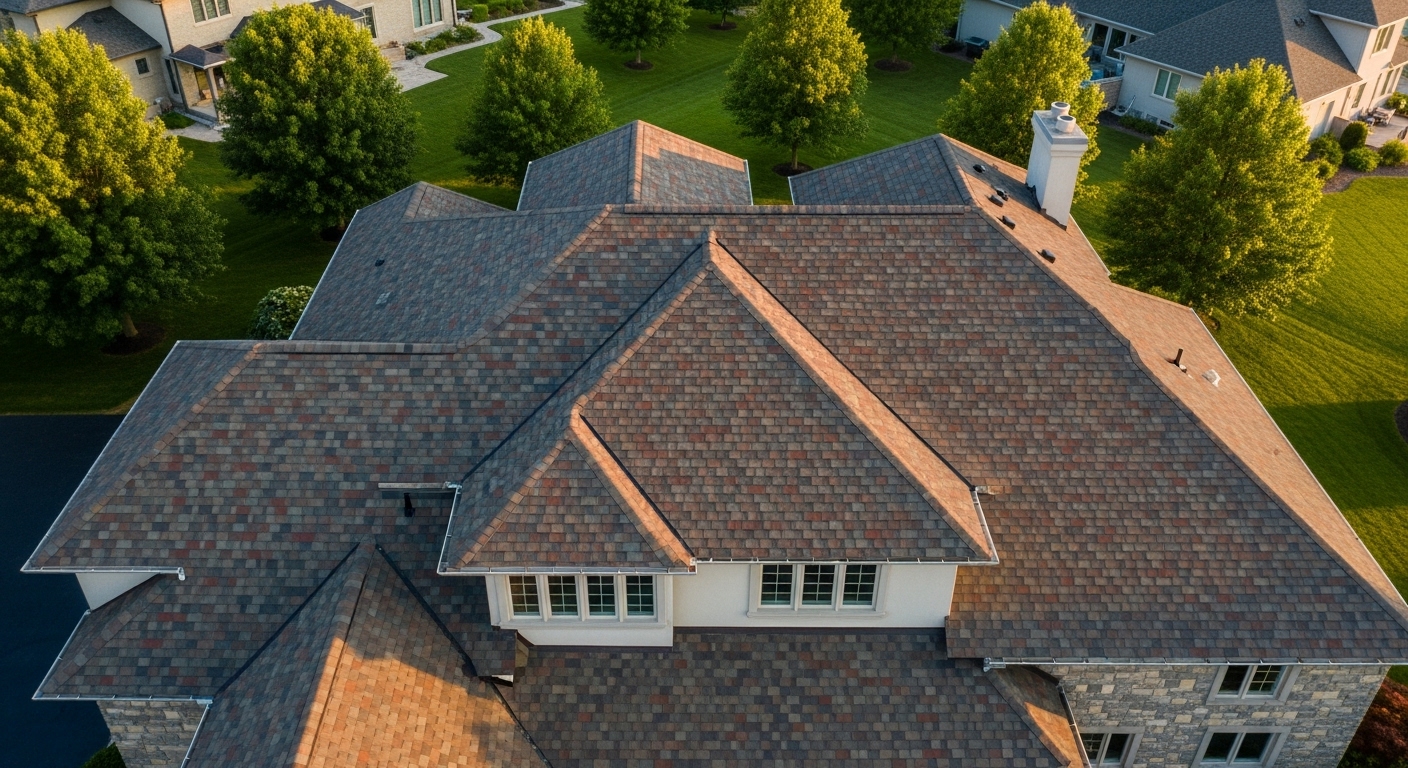
People often expect a clever trick here. Like there is a secret color roofers whisper about after the ladder is packed away. Truth is less dramatic, more physics, more heat, more slow wear over years. Shingle color does affect lifespan, but not in a magical way. It works quietly, daily, under the sun, season after season.
If longevity is the goal, color matters mostly because of how it handles heat and ultraviolet exposure. Everything else follows from that.
Why sunlight quietly ruins asphalt shingles
Asphalt shingles age mainly due to UV radiation and heat cycling. The sun bakes them during the day, they cool at night, repeat for decades. That expansion and contraction dries out asphalt binders. Over time, granules loosen, edges curl, cracks show up. This process never stops, even on cloudy days.
According to long term material performance testing, surface temperatures on dark shingles can run 20 to 25 degrees hotter than lighter ones under the same conditions. That heat difference alone can accelerate aging by several years across a full roof lifespan.
For 2025, the top GAF trending shingle colors nationally are Charcoal, Weathered Wood, Pewter Gray, and Barkwood.
“These four colors are classics,” Ashley says of the two brown tones (Weathered Wood and Barkwood) and the two black/gray tones (Charcoal and Pewter Gray). “They can appear to be trendy — but they’re timeless colors, and they work well with a lot of different color palettes.”
https://www.gaf.com/en-us/blog/your-home/2025-shingle-color-trends-by-region-281474980440836
Lighter colors generally last longer, here is why
White, light gray, beige, and pale tan shingles reflect more sunlight. They absorb less heat, which keeps the asphalt compounds from breaking down as fast. Lower surface temperatures mean slower oxidation, fewer micro fractures, and better granule retention over time.
In real world terms, a light colored asphalt shingle roof may last 2 to 5 years longer than a very dark one under the same climate and installation conditions. Not always. But often enough that manufacturers and material scientists agree on the trend.
Weathered Wood and Barkwood mimic a traditional wood shake. Often, they’re paired with craftsman-style homes or traditional farmhouses.
Charcoal and Pewter Grey work well “if your home is more cool-toned,” shares Ashley. These two dark colors work well with “modern farmhouses or to achieve a more modern aesthetic when you want a really contrasting look.” Plus, the black—Charcoal—roof, Ashley says, “is and has been a go-to, trend-wise, for years now—especially with a light-colored siding, like a bright white.”
https://www.gaf.com/en-us/blog/your-home/2025-shingle-color-trends-by-region-281474980440836
Dark shingles are not fragile, just stressed more
Black, dark brown, and charcoal shingles are not weak. They simply run hotter. Higher heat causes faster aging, especially in warm and sunny regions. In colder climates, that difference matters less, but it never disappears completely.
Dark shingles also experience more thermal cycling stress. Hotter daytime temperatures followed by cool nights cause repeated movement in the shingle mat. Over long periods, that motion adds up.
Styleboard with neutral and cool tones. Sand Dune colored shingles from Owens Corning, dusty blue adirondack chair, beach grass, grey shake siding with purple-grey shutters, medium tan paint swatch.Pacific Wave styleboard with medium grey front door, lavender-grey paint roller, dark patterned door mat, lavender potted plant, and a family sitting on a couch together. Pacific Wave colored shingle swatch from Owens Corning in the center.Is your home exterior color palette cool or warm? Cool colors have tints of blue, green, and purple, while warm colors typically contain reds and yellows. White and gray can work with either palette, depending on the undertones.
https://www.owenscorning.com/en-us/roofing/blog/roof-color-guide
Climate plays a bigger role than people admit
Color impact is strongest in hot climates with intense sun exposure. In places with long summers and high UV levels, lighter shingles show noticeably slower wear patterns. In cooler northern regions, the lifespan difference between colors shrinks.
Snow covered roofs equalize temperature differences during winter months. That reduces color influence for part of the year. Still, summer sun usually does most of the damage.
Granule technology matters more than shade alone
Modern asphalt shingles use ceramic coated granules designed to block UV rays. Higher quality shingles use better granule bonding and more consistent coating thickness. A high quality dark shingle can outlast a cheap light one. Color helps, but it does not override manufacturing quality.
Some newer shingles are labeled as cool roof rated. These use reflective granules even in darker tones. They reduce heat absorption compared to older dark shingles, though still not as cool as light colors.
Manufacturer data supports the color effect, quietly
While manufacturers avoid promising longer life based on color alone, internal durability testing consistently shows lower heat aging in lighter shades. This shows up in lab accelerated weathering tests where lighter shingles retain flexibility longer than darker samples under the same exposure.
They rarely advertise this loudly. Marketing prefers aesthetics. Engineering notices the difference anyway.
What color lasts the longest in practical terms
If the goal is maximum lifespan, light gray and off white asphalt shingles tend to perform best across most regions. They balance reflectivity with dirt resistance and visual aging. Pure white shingles exist but show staining more easily, which affects appearance before performance.
Light gray shingles often look acceptable longer while aging slower internally. That combination makes them a quiet favorite among long term focused homeowners.
Other factors that can erase color advantages
Poor attic ventilation can negate any color benefit. Trapped heat from below ages shingles faster regardless of shade. Installation errors, improper nailing, or low quality underlayment also shorten lifespan far more than color choices ever could.
Color is a supporting factor, not the lead actor.
Final thoughts
Lighter asphalt shingle colors generally last longer because they stay cooler and resist heat driven aging. The difference is real but not extreme. Think in years, not decades. Quality materials, proper ventilation, and correct installation still matter more than shade selection alone.
If all else is equal, lighter wins quietly over time. Not flashy. Just steady.
