
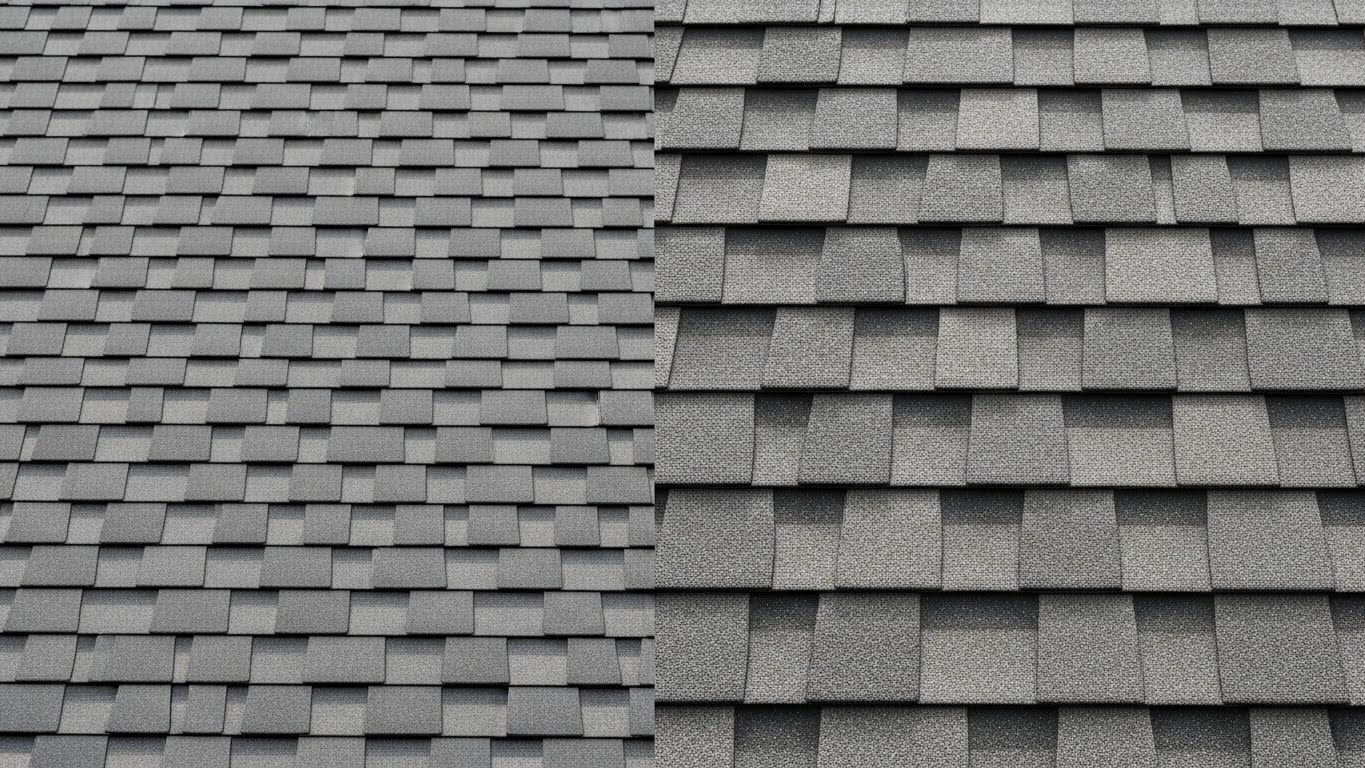
Roof estimates confuse people more than they should, mostly because the price gap between 3-tab shingles and architectural shingles looks small at first glance, then suddenly balloons when labor and lifespan get involved. A lot of quotes toss out numbers without context. Square footage, pitch, tear-off, waste factor, all of it quietly stacks up.
What 3-tab shingles really cost today
3-tab shingles are the flat, uniform ones you have seen everywhere since the 1980s. They look clean from a distance, slightly plain up close.
Material cost for 3-tab shingles in the US typically falls between $80 and $120 per roofing square which equals 100 square feet. That range has stayed fairly consistent in recent years, even with material inflation nudging things upward.
Installed cost is where people feel relief. Most full replacements with 3-tab shingles land around $4.00 to $5.50 per square foot installed, depending on roof pitch, tear-off layers, and local labor rates. A simple 2,000 square foot roof often comes out between $8,000 and $11,000 all-in. That price still makes sense for tight budgets, rentals, or short ownership plans.
Architectural shingles pricing breaks the illusion
Architectural shingles cost more, no shock there, but the gap is not always dramatic. These shingles are thicker, layered, and heavier. They fake the look of wood shake or slate from the street, and yes people do notice that difference even if they do not say it out loud.
Material cost usually ranges from $120 to $180 per square, sometimes higher for premium lines. Installed pricing generally runs $5.50 to $8.50 per square foot, with a lot of projects landing near the middle. That same 2,000 square foot roof now often falls between $11,000 and $17,000, depending on roof complexity.
So yes, architectural shingles often cost 25% to 50% more upfront, sometimes more, but the story does not stop there.
Lifespan changes the math quietly
3-tab shingles usually carry warranties around 20 to 25 years, but real-world performance often lands closer to 15 to 20 years, especially in hot or storm-heavy regions. Granule loss shows up earlier than people expect.
Architectural shingles often come with 30-year to lifetime warranties, though lifetime is a marketing word people misunderstand. In practice, many architectural roofs last 22 to 30 years, sometimes longer with decent attic ventilation. That extra decade matters when cost per year gets calculated, even if nobody does that math during the estimate phase.
Wind ratings matter more than brochures admit
Wind ratings quietly separate these two shingle types. Most standard 3-tab shingles are rated for 60 mph winds, sometimes 70 mph if installed with extra adhesive steps. That is fine in calm climates, less fine elsewhere.
Architectural shingles often carry 110 mph to 130 mph wind ratings, depending on installation method and brand guidelines. Insurance adjusters notice this after storms. Homeowners notice it after neighbors lose shingles and they do not.
According to industry storm loss data, homes with higher wind-rated shingles show measurably fewer partial roof failures during moderate wind events. Not dramatic, but consistent.
Labor cost is not identical
This part surprises some homeowners. Architectural shingles weigh more and take slightly longer to install. That extra time shows up as labor cost, but not always in a straight line.
On simple roofs, labor differences may only add $0.50 to $1.50 per square foot. On steep or cut-up roofs, the difference widens. Crews slow down. Fatigue kicks in. Safety steps multiply.
Still, labor alone rarely explains the full price jump. Material thickness and waste factor do most of the damage to the budget.
Waste factor eats money silently
3-tab shingles usually carry a 10% waste factor on simple roofs. Architectural shingles often need 12% to 15%, sometimes more on complex layouts. That extra waste gets paid for, even if it ends up in a dumpster behind your house.
On a large roof, waste alone can add several hundred dollars, quietly baked into the estimate line item nobody asks about.
Resale value shifts the decision
Appraisers and buyers do notice architectural shingles. Not in dramatic dollar jumps, but in buyer behavior. Homes with architectural shingles often sell faster, especially in mid-range neighborhoods where curb appeal actually matters.
Industry resale studies have shown roofing upgrades returning 55% to 65% of their cost at resale, depending on region and timing. Architectural shingles tend to sit at the higher end of that range, while 3-tab roofs lean lower.
Insurance discounts sometimes apply
Some insurance carriers offer small premium reductions for roofs with higher wind ratings or impact resistance. These discounts are not huge, often 5% to 15%, but they exist in storm-prone regions.
3-tab shingles rarely qualify. Architectural shingles sometimes do, especially when paired with proper underlayment and documented installation.
When 3-tab shingles still make sense
Despite everything said above, 3-tab shingles are not obsolete. They still make sense when budget is tight, ownership is short, or the structure itself does not justify premium materials.
Rental properties, flips, detached garages, and sheds still lean heavily toward 3-tab for a reason. Lower upfront cost, simpler repairs, predictable appearance. Just do not expect them to age gracefully.
When architectural shingles pay off better
Long-term ownership, harsh weather zones, resale-focused upgrades, and HOA-driven appearance standards all push the math toward architectural shingles. The upfront cost hurts more, but spread across 25 years instead of 15, the annual cost gap narrows fast.
Most homeowners who upgrade rarely regret it. Complaints usually come from people who paid for premium shingles on roofs with poor ventilation or rushed installation.
The real cost difference summarized
3-tab shingles usually cost $2,000 to $6,000 less upfront on an average home. Architectural shingles usually last longer, resist wind better, and look less tired over time.
The cheaper option is not always cheaper. The expensive option is not always smarter.
Roofing decisions live in that uncomfortable middle where numbers meet weather and patience.
If nothing else, now the numbers make more sense, even if the choice still feels annoying.
